
The Evidence Gap: Why ML Summaries Fail Under Scrutiny
Most ML summaries break when you ask for proof. Learn the failure modes—and a practical, evidence-grounded standard for auditable research briefs.
1) The moment every literature summary gets tested: “Where is that in the paper?”
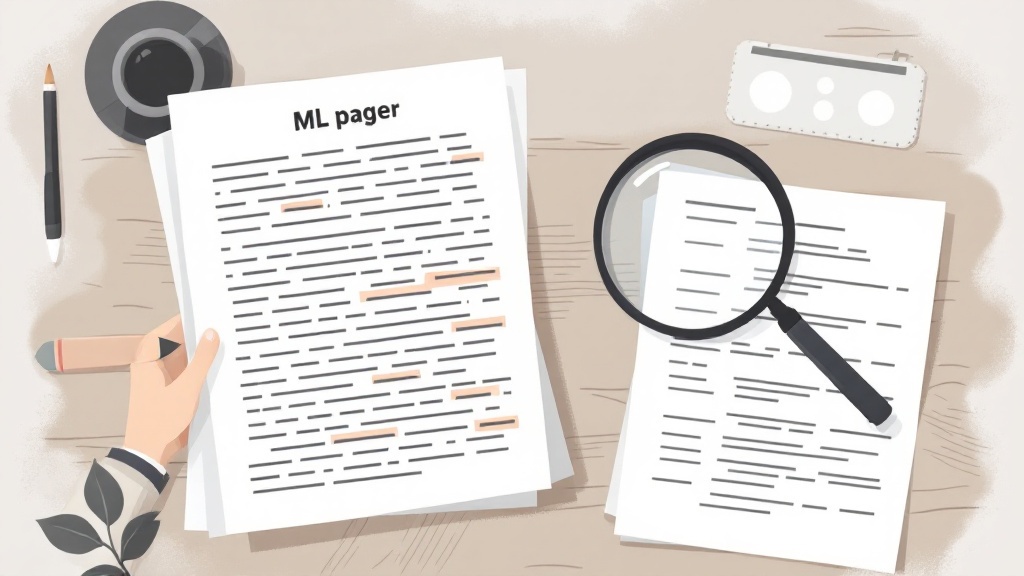
In fast-moving ML, literature-review work often starts as triage: skim the abstract, scan a table, pull a takeaway, move on. That pace is understandable—but it creates an evidence gap. When a stakeholder asks, “Where does that claim come from?” many summaries can’t answer with a page, figure, or exact quote. Under scrutiny (a roadmap meeting, a rebuttal, a customer escalation), the summary collapses because it’s not anchored to source evidence.
This isn’t just a writing issue; it’s a researchops problem. Teams need briefs that support decisions, not vibes. If a conclusion can’t be traced back to the original PDF—methods, datasets, metrics, limitations—then it’s hard to compare approaches fairly and impossible to audit later. The result is wasted cycles: re-reading papers, arguing over interpretations, or realizing too late that “SOTA” depended on an incompatible benchmark setup.
2) Three common failure modes: citation drift, metric cherry-picking, and missing experimental context
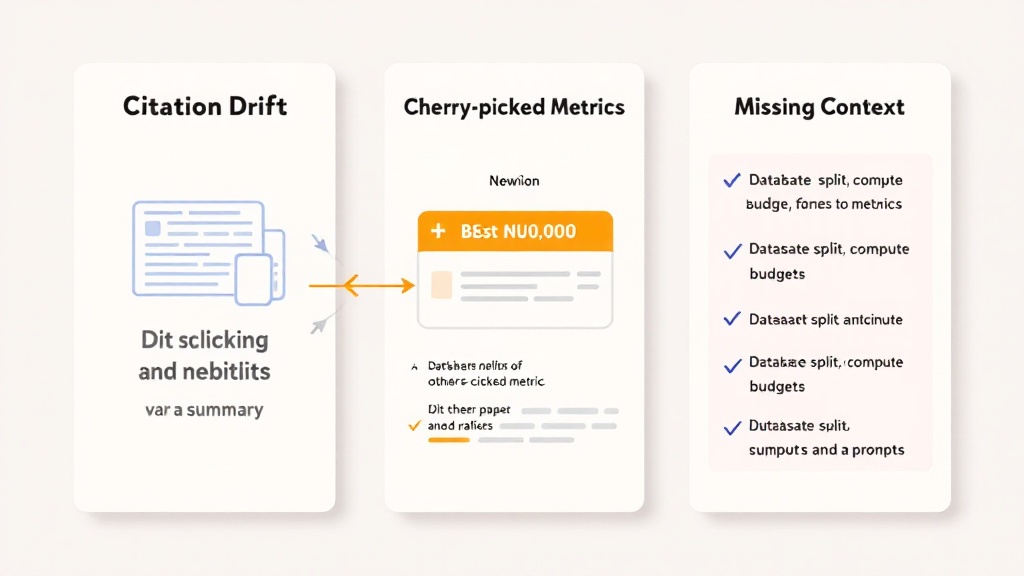
Citation drift happens when a summary accurately describes something but not what the cited source actually supports—e.g., attributing a limitation to the wrong section, blending multiple papers into one narrative, or citing the paper while paraphrasing an author blog post. In scientific-writing, this shows up as confident statements with weak grounding: no page numbers, no figure references, no direct link to the evidence.
Next is evaluation distortion through cherry-picked metrics. Summaries often highlight the best headline number while ignoring variance, different splits, ablations, compute budgets, or whether results are tuned on the test set. Finally, missing experimental context kills reproducibility: training data details, preprocessing, prompt format, decoding settings, and baseline parity are frequently omitted. These gaps create unfair comparisons (“Method A beats B”) that don’t survive a careful read. The cost isn’t academic—it’s strategic: teams ship decisions based on mismatched benchmarks and unverified claims.
3) A practical standard for evidence-grounded briefs that survive audits and rebuttals
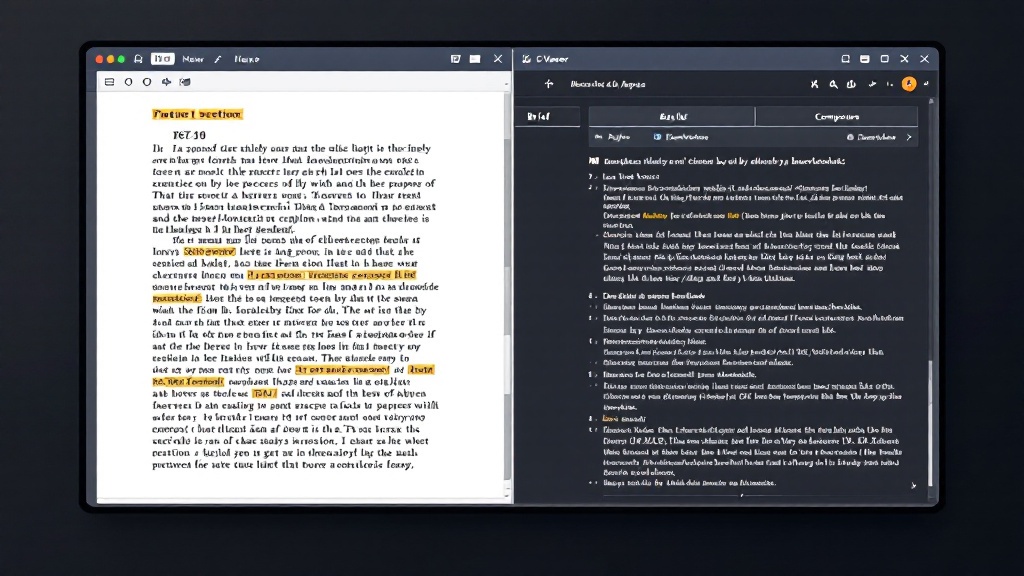
An evidence-grounded brief is simple to define: every important claim is paired with what was measured, under what conditions, and where it appears in the source. A durable standard is: (1) extract results as structured fields (task, dataset, split, metric, baseline, compute), (2) attach page-level citations for each claim, and (3) record caveats—limitations, negative results, and assumptions—next to the headline takeaway. This turns a literature-review into an auditable artifact instead of a disposable recap.
Operationally, this is where strong researchops tooling matters. Systems like CiteSignal Research focus on continuously discovering new work, parsing PDFs, and generating comparisons while keeping every statement tethered to the original passage. The goal isn’t longer summaries; it’s traceable summaries: side-by-side comparisons that make trade-offs explicit and defensible. When a stakeholder challenges a SOTA claim or a setup detail, you don’t re-open ten PDFs—you click the citation, verify the evidence, and move forward with confidence.